Transformer Maintenance Checklist: Extending Service Life & Avoiding Failures
A distribution transformer is expected to run continuously for decades with almost no attention — which is exactly why its maintenance gets deferred, until a unit fails and an unplanned outage costs far more than the inspection that would have prevented it. Most transformer failures are not sudden. They are the end point of a slow process of insulation ageing, moisture ingress, loose connections or cooling degradation, each of which announces itself well in advance to anyone who is looking. The checklist below sets out what to look for, how often, and which findings justify taking a unit out of service.
Why Transformers Fail
Understanding the common failure mechanisms makes a maintenance programme more purposeful than simply working through a form. The dominant causes across both oil-immersed and dry-type units are:
- Insulation ageing. Sustained operation above the design temperature rise accelerates the chemical breakdown of paper and resin insulation, and the effect is cumulative and irreversible.
- Moisture and contamination. Water entering the tank of an oil-immersed unit — through a failed gasket, a breather, or a poorly sealed bushing — sharply reduces the dielectric strength of the oil and degrades the paper insulation.
- Loose or corroded connections. Terminations that loosen through thermal cycling create localised heating that compounds itself until the joint fails.
- Cooling degradation. Blocked radiators, dust-clogged ventilation openings on dry-type units, or a failed cooling fan all reduce heat dissipation and push the winding temperature up.
- External electrical stress. Lightning surges, switching transients and repeated through-faults impose mechanical and dielectric stress that shortens insulation life.
Every item on the checklist that follows exists to detect one of these five processes early.
Routine Inspection Schedule
Intervals should be adapted to your load profile, ambient conditions and the criticality of the installation — a transformer serving a continuous industrial process in a dusty or coastal environment warrants more frequent attention than a lightly loaded unit in a clean indoor substation. The table gives a reasonable baseline for a typical commercial or industrial installation.
| Interval | Checks |
|---|---|
| Monthly (visual, energised) | Oil level and temperature gauges; winding temperature indicator; any audible change in hum; visible leaks, rust or staining; ventilation openings clear; ambient temperature and room airflow. |
| Quarterly | Clean cooling surfaces and radiator fins; verify cooling fan and pump operation where fitted; check silica-gel breather colour; inspect cable terminations and earthing connections for discolouration; confirm alarm and trip devices are functional. |
| Annually (de-energised) | Insulation resistance and polarisation index; turns ratio test; winding resistance; oil dielectric strength and moisture content; tighten terminations to specified torque; inspect gaskets, bushings and surge arresters; clean dry-type windings of accumulated dust. |
| Every 3–5 years | Dissolved gas analysis trending review; oil furan or degree-of-polymerisation assessment on older units; power factor / tan-delta testing; thorough bushing and tap-changer inspection. |
Oil-Immersed vs. Dry-Type: Different Care
The two construction types age differently and need different attention. Oil-immersed transformers depend on the insulating oil for both dielectric strength and heat transfer, so oil condition is the single most informative diagnostic available. Regular sampling for dielectric breakdown voltage, moisture, acidity and dissolved gases gives an early picture of internal condition; dissolved gas analysis in particular can distinguish overheating from partial discharge or arcing long before any external symptom appears. Gaskets, breathers and conservator arrangements should be treated as consumables with a finite life.
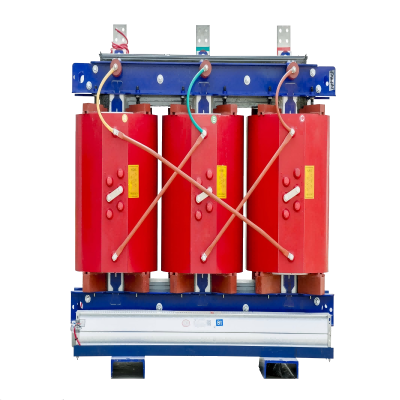
Dry-type transformers have no oil to sample, which removes a maintenance burden but also removes a diagnostic tool. Their vulnerability is environmental: dust, fibres and moisture settling on the windings reduce surface creepage distance and impede cooling. Keeping the enclosure and windings clean, the ventilation unobstructed and the room dry accounts for most of what a dry-type unit needs. Thermal imaging during operation is especially valuable here, since it detects developing hot spots without an outage.
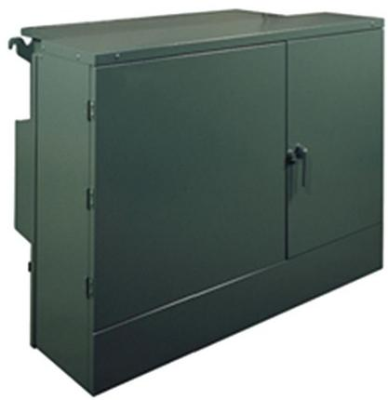
For box-type (compact) substations, add the enclosure itself to the programme: door seals, water and vermin ingress points, ventilation, and the condition of the integrated switchgear compartment all affect the reliability of the assembly.
Warning Signs That Warrant Immediate Action
Some findings justify escalating from routine monitoring to investigation or shutdown:
- A sudden change in operating temperature at unchanged load.
- A rising trend in combustible dissolved gases, or the appearance of acetylene in an oil sample.
- Visible oil leakage, or an oil level that has fallen without explanation.
- A sharp, crackling or markedly louder sound from the tank or enclosure.
- Discoloured, charred or heat-marked terminations and bushings.
- Insulation resistance that has fallen materially against its own historical baseline.
- Repeated operation of protective relays, pressure relief devices or Buchholz alarms.
The common theme is trend rather than absolute value. A single reading says little; the same measurement compared against the commissioning baseline and the previous few years of records is what reveals a developing problem. Keeping consistent records for each unit, using the same test methods and instruments, is the most valuable maintenance habit there is.
Building a Practical Programme
A maintenance programme only works if it is realistic. Catalogue every transformer with its nameplate data, installation date, load profile and criticality, and record the commissioning test values as the baseline. Assign intervals from the table above, adjusted for environment and importance, and make sure someone owns the schedule. Keep spares and consumables available for critical units, and plan outage windows in advance rather than reacting to them. Where a unit is nearing the end of its life, condition data also supports the business case for planned replacement, which is always cheaper than an emergency one. Attention should extend to the associated switchgear, since a transformer protection scheme is only as reliable as the devices around it.
With more than 30 years of manufacturing and servicing transformers and switchgear for industrial and utility customers worldwide, Jinan Qinghe Electric can help you build a maintenance plan for your installed base, assess the condition of ageing units, or specify replacements. Contact our engineering team to discuss your project.