Amorphous Alloy Transformers: How They Cut No-Load Losses (and When to Choose Them)
For distribution transformers, energy is lost in two distinct ways. Load losses (copper losses) rise and fall with the current the transformer is carrying, while no-load losses (core or iron losses) are present every hour the unit is energised — whether it serves full load or none at all. Because a distribution transformer typically stays energised continuously for decades, no-load loss quietly accumulates into a very large number over the service life of the asset. Amorphous alloy core technology exists specifically to attack that number. This guide explains how amorphous cores work, how they compare with conventional silicon steel, and which projects justify the choice.
What Makes an Amorphous Core Different
Conventional transformer cores are built from grain-oriented silicon steel — a crystalline material whose atoms are arranged in an ordered lattice. Amorphous alloy is produced by cooling molten iron-based alloy extremely rapidly, so the atoms freeze in a disordered, glass-like arrangement before a crystal structure can form. The result is a very thin ribbon with markedly different magnetic behaviour.
Lower hysteresis loss. The disordered structure has no crystal grain boundaries to impede domain wall movement, so less energy is dissipated each time the magnetic field reverses.
Lower eddy-current loss. Amorphous ribbon is far thinner than silicon steel laminations and has higher electrical resistivity, both of which suppress circulating currents in the core.
Continuous energised benefit. Because the saving is in the no-load component, it accrues 24 hours a day regardless of loading — which is exactly the profile of most distribution transformers.
The trade-offs are physical rather than electrical. Amorphous ribbon is thin, hard and brittle, and it saturates at a lower flux density than silicon steel. Cores must therefore be wound and handled with dedicated equipment, and the core cross-section is generally larger for the same rating. In practice that means an amorphous unit tends to be somewhat larger, heavier and higher in first cost than an equivalent silicon steel design.
Amorphous Alloy vs. Silicon Steel at a Glance
| Characteristic | Amorphous alloy core | Grain-oriented silicon steel core |
|---|---|---|
| No-load (core) loss | Substantially lower | Higher |
| Load (winding) loss | Comparable — determined by winding design | Comparable — determined by winding design |
| Saturation flux density | Lower | Higher |
| Core size and weight | Larger / heavier for the same rating | More compact |
| Initial purchase price | Higher | Lower |
| Best suited to | Continuously energised, low or variable average load | Steady high-load duty, tight space or weight limits |
When Amorphous Makes Commercial Sense
The decision is an economic one, and it turns on load factor and electricity price. The lower the average loading and the higher the energy tariff, the faster the higher purchase price is repaid through reduced no-load loss. Amorphous designs are usually worth evaluating where:
The transformer is energised continuously but lightly or intermittently loaded — rural feeders, residential distribution, standby and backup supplies, seasonal or agricultural loads.
Electricity prices are high, or the owner also pays for the transformer's own losses over a long ownership horizon.
The buyer evaluates bids on total ownership cost using capitalised loss factors (A and B values) rather than purchase price alone.
The project carries efficiency, carbon-reduction or green-building targets that reward measurable loss reduction.
Conversely, silicon steel often remains the better answer for heavily and steadily loaded industrial transformers, where load loss dominates the total, and for installations with strict footprint, headroom or crane-capacity limits.
How to Evaluate Bids Properly
Comparing amorphous and silicon steel offers on headline price alone will always favour silicon steel and will frequently be the wrong answer. A defensible comparison follows a few steps:
Ask every bidder to state guaranteed no-load loss and load loss at the specified rating and tap, tested to the applicable standard.
Apply your own capitalised cost per kW of no-load loss and per kW of load loss, based on local tariff, expected load factor and evaluation period.
Add the evaluated loss cost to the purchase price to obtain total evaluated cost, then rank the bids on that figure.
Confirm the mechanical envelope — dimensions, weight and foundation or platform loading — before committing, since amorphous units are typically larger.
Check noise and inrush expectations with the manufacturer if the installation is noise-sensitive or protection settings are tight.
Specifying the Right Unit for Your Project
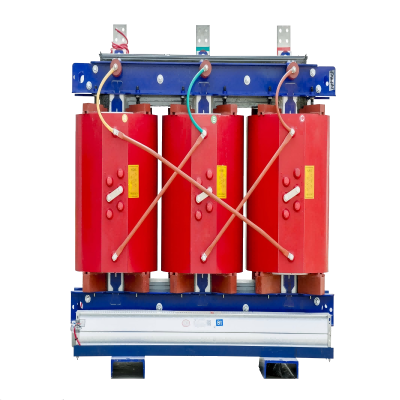
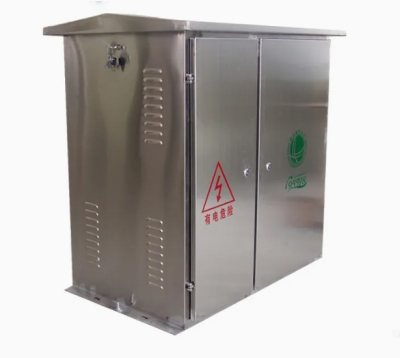
Amorphous cores can be applied across both liquid-filled and enclosed distribution formats, and the surrounding selection questions do not change: insulation system, cooling class, enclosure and protection rating, tap arrangement, and how the unit will be integrated with upstream and downstream equipment. If your installation is indoors or in a fire-sensitive area, review our dry-type transformer range; for outdoor and utility-style installations, see our oil-immersed transformer range. Where the transformer, switching and protection must be delivered as a single package, our box-type substation solutions combine them in one compact, factory-assembled enclosure.
With more than three decades of experience manufacturing transformers and switchgear for industrial and utility customers worldwide, Jinan Qinghe Electric can help you compare core technologies against your actual load profile and tariff rather than against a generic assumption. Contact our engineering team with your rating, voltages, expected load factor and site constraints, and we will prepare a technical proposal and loss-evaluated quotation for your project.