Pad-Mounted Transformers for North American Projects: Ratings, Standards & Selection
Pad-mounted transformers are the workhorse of underground distribution across North America. Wherever overhead poles are impractical or undesirable — commercial campuses, residential subdivisions, data centers, solar farms, EV charging hubs and industrial parks — a tamper-resistant, ground-level enclosure stepping medium voltage down to utilization voltage is usually the equipment of choice. For buyers specifying this equipment for the first time, the terminology can be confusing: loop feed versus radial feed, live front versus dead front, and a long list of accessories that vary by utility. This guide breaks down what actually drives the selection.
What Makes a Pad-Mounted Transformer Different
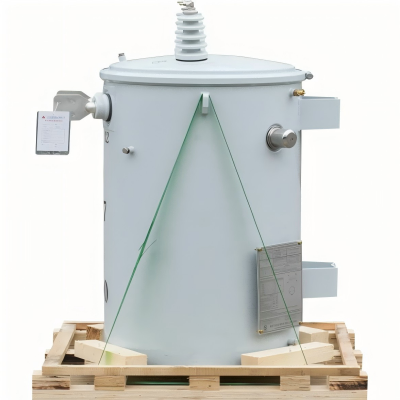
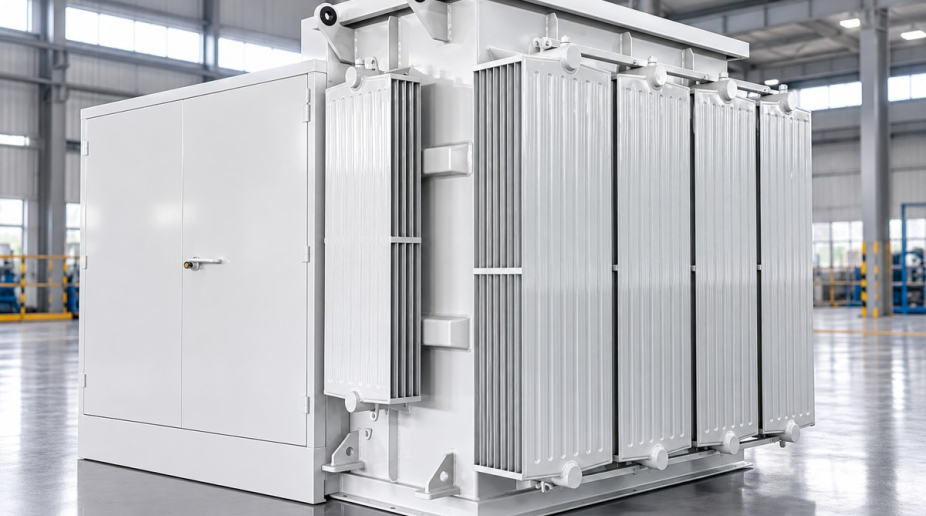
A pad-mounted unit is a fully enclosed, tamper-resistant distribution transformer designed to sit directly on a concrete pad at grade, with no fence or vault required. All energized parts are contained behind locked, sectionalized compartments, so the unit can be installed in publicly accessible areas. Key characteristics include:
Ground-level installation on a concrete pad, fed by underground cable from below.
Separate high-voltage and low-voltage compartments, typically side by side behind hinged doors with a pentahead bolt and provision for a padlock.
Tamper-resistant construction so that the unit is safe in unsecured, publicly accessible locations.
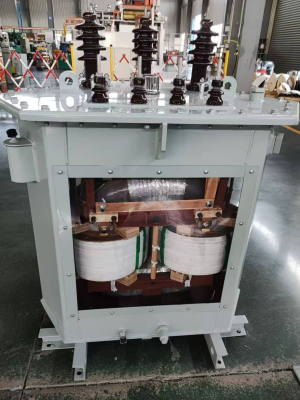
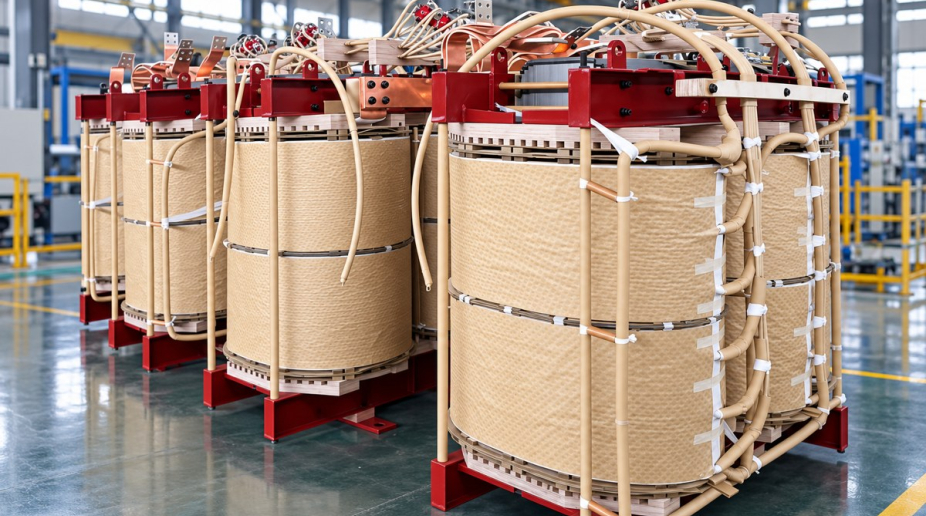
Liquid-immersed core and coil in most North American applications, using mineral oil or a less-flammable fluid such as natural or synthetic ester.
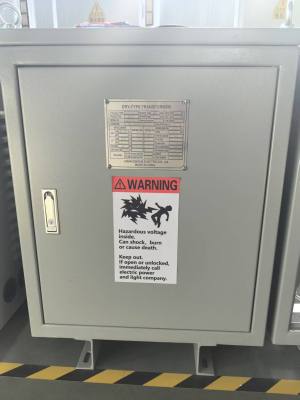
Where a project requires an indoor or fire-sensitive installation instead, a dry-type transformer is normally the better answer. For outdoor underground distribution, the pad-mounted oil-immersed design remains the standard.
Single-Phase vs. Three-Phase, and Feed Configuration
Two decisions shape the physical design more than anything else: phase configuration and how the primary cable enters the unit.
| Choice | Typical Application | What to Consider |
|---|---|---|
| Single-phase | Residential subdivisions, small commercial services, street lighting | Smaller footprint and lower cost; limited to single-phase loads |
| Three-phase | Commercial buildings, industrial plants, solar and EV charging sites | Required for motor loads and most modern equipment |
| Radial feed | End-of-line or dead-end service | Simplest and least expensive; loss of the feeder means loss of service |
| Loop feed | Sites needing service continuity, or multiple units on one circuit | Two primary cable sets allow the unit to be sectionalized without dropping downstream loads |
You will also see dead-front and live-front primary designs. Dead-front construction uses fully shielded, separable insulated connectors (elbows) on bushing wells — the dominant choice in North America because no energized metal is exposed when the compartment is open. Live-front designs use exposed porcelain bushings and are far less common in new work.
Ratings and Standards to Specify
A complete pad-mounted transformer specification should state, at minimum, the following. Confirm each item with the serving utility before release, because utility standards frequently override generic specifications.
kVA rating based on calculated connected load, demand factor and future growth allowance.
Primary and secondary voltage, including winding connection (for example delta or grounded wye) and any required taps for voltage adjustment.
BIL (basic impulse level) matched to the system voltage class.
Impedance, which drives available fault current at the secondary and therefore downstream equipment ratings.
Protection — bayonet fuses, current-limiting fuses, load-break switching and surge arresters as required.
Insulating fluid, including whether a less-flammable ester fluid is required by the authority having jurisdiction.
Enclosure and finish suited to the environment, with corrosion protection appropriate to coastal or industrial sites.
Efficiency compliance where applicable; distribution transformers sold in the United States are subject to federal efficiency regulations, so confirm the current requirement with your supplier.
Relevant industry documents typically referenced in North American specifications include the IEEE C57 series for liquid-immersed distribution transformers and the applicable ANSI/IEEE standards for pad-mounted equipment construction. Your utility's own construction standard is usually the controlling document.
Practical Selection Advice
Beyond the nameplate, several practical points repeatedly cause delays on North American projects:
Confirm the utility standard early. Bushing arrangement, cabinet dimensions, pad opening and locking hardware are often utility-specific.
Match the pad to the unit. The concrete pad and cable stub-ups are usually poured before the transformer arrives; a dimensional mismatch is expensive to fix.
Plan clearances. Working clearance in front of the doors and separation from buildings and combustibles must be verified against local code.
Size for growth, not just today. Chronic overloading shortens insulation life, but heavily oversizing raises no-load losses that run continuously.
Coordinate with downstream equipment. Secondary voltage, impedance and available fault current all feed directly into the switchgear and distribution equipment selection.
Where several transformers, switchgear sections and metering must be combined into a single outdoor package, a compact box-type substation is often a more economical alternative to assembling separate equipment on site.
Talk to an Engineer Before You Specify
Most costly mistakes in pad-mounted transformer procurement happen at the specification stage, not in manufacturing. With three decades of experience building transformers and switchgear for industrial and utility customers worldwide, Jinan Qinghe Electric can review your single-line diagram, load schedule and utility requirements and recommend a configuration that fits both the standard and the budget. Contact our engineering team to discuss your project requirements and request a quotation.